 |
Albi — A Worcester Warriors European Adventure
The Journey South
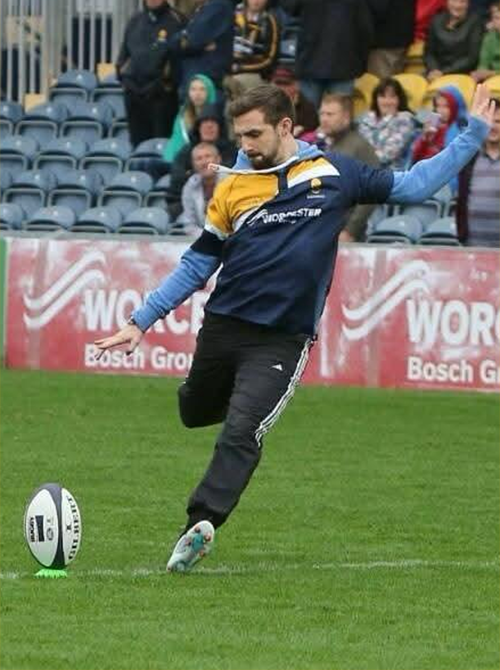
There is something rather special about travelling abroad with Worcester Warriors. It is never quite the same as simply going on holiday, because although the destination might be a foreign city and the journey might take you hundreds of miles from home, you are carrying a little piece of Worcester with you. You are travelling as a supporter, surrounded by people who share the same passion, the same colours and, quite often, the same anticipation of what lies ahead. The rugby is the reason for the journey, of course, but once you set off, the journey itself becomes part of the story.
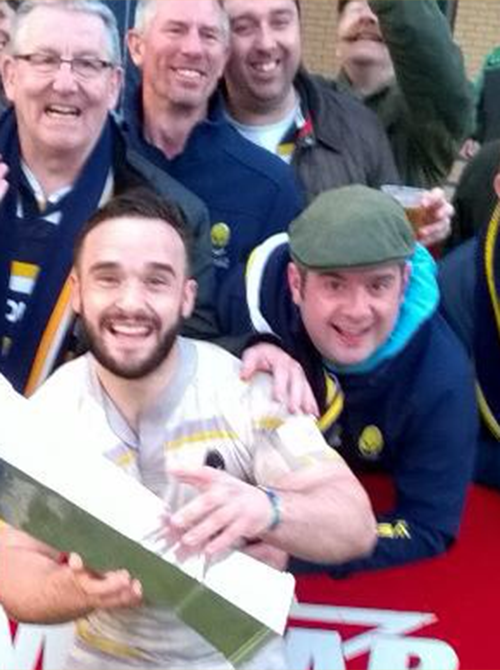
That was certainly the case when we travelled to Albi in the south of France for Worcester's European Rugby Cup encounter with SC Albi. Hundreds of Warriors supporters had made the trip, turning what might otherwise have been an ordinary European away fixture into something much bigger. There was that familiar sense of adventure that accompanies a Warriors European trip: the airport meeting points, the conversations about the match, the good-natured banter, the anticipation of seeing somewhere new and, above all, the feeling that we were all heading off together on another chapter in the story of our club.
And Albi was certainly somewhere new.
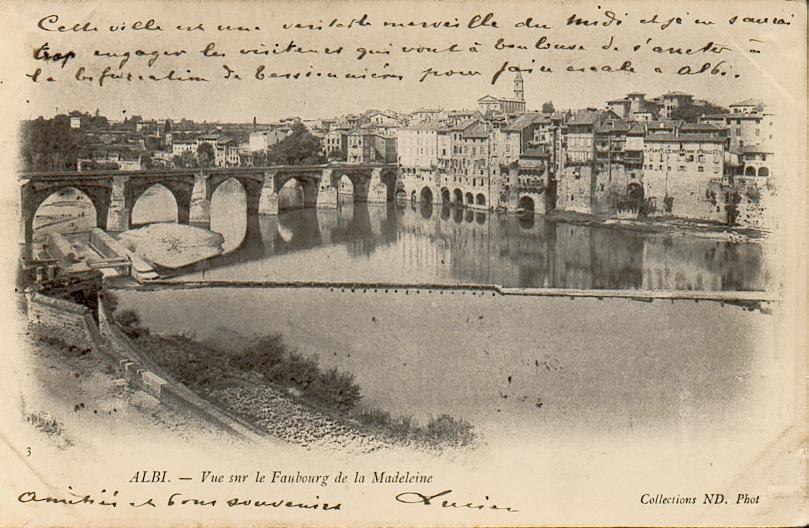
Set beside the River Tarn in southwest France, Albi is one of those places that begins to reveal itself slowly. At first you notice the extraordinary colour of the city. Its buildings, constructed largely from the distinctive red and orange brick of the region, glow in the southern French light, giving the old centre a warmth and character that is quite different from the stone-built towns many of us might have expected. Then, as you walk further into the historic heart of the city, you begin to realise that this is not simply an attractive French town with an interesting rugby club. Albi is a place carrying centuries of history on its shoulders.
The old streets, the river, the bridges and the magnificent buildings all seemed to draw us further into the story. The historic centre, now recognised as part of the UNESCO-listed Episcopal City of Albi, has an atmosphere that makes it remarkably easy to forget why you originally came. We had travelled there for rugby, but before long the rugby had become just one part of the adventure.
There were four of us travelling together, and like most good trips, we quickly settled into the rhythm of exploring, eating, talking, laughing and taking in everything around us. We were determined not simply to arrive, watch a game and go home. We wanted to experience Albi.
Little did we know quite how memorable that experience was going to become. |
A Hotel With a History of Its Own
Our accommodation was almost a story in itself. The four of us stayed in a beautiful old hotel that had once been associated with monastic life and had provided accommodation for monks. It was one of those buildings where you felt that the walls had witnessed far more history than any modern hotel could possibly contain.
There was something wonderfully peaceful about it. The building had the character of an old cloister, with its age visible everywhere, and the interior was filled with artwork and religious memorabilia that had been displayed with considerable taste. Rather than feeling like a museum, however, it remained a welcoming and comfortable place to stay. After the excitement of travelling to France with hundreds of Warriors supporters, it gave us somewhere quiet to retreat to at the end of the day.
We would return to the hotel after our wanderings through Albi and find ourselves talking about everything we had seen. That was one of the pleasures of the trip. We were not simply ticking attractions off a list. We were experiencing them together, comparing what had caught our attention and often discovering that one of us had noticed something the others had completely missed.
The hotel seemed almost perfectly suited to the city itself. There was a sense of stepping backwards through time every time we walked through its doors. Outside was the noise and excitement of a European rugby trip; inside, there was calm, history and an atmosphere that seemed to encourage you to slow down.
And perhaps that was exactly what we needed,
because Albi had a great deal for us to take in. |
Walking Through the History of Albi
As we explored the city, it became impossible to ignore the extraordinary story behind the name Albi and its connection with the Albigensians, or Cathars.
The Cathars were part of a medieval religious movement that became particularly influential in southern France. Their beliefs challenged important teachings and authority of the Catholic Church, and the conflict that followed became both a religious and political struggle. The Albigensian Crusade began in 1209 and brought warfare and enormous upheaval to the region.
Standing in Albi centuries later, it was difficult to imagine the violence and uncertainty that had once surrounded these streets. Yet the consequences of that medieval conflict were still standing proudly before us.
And nowhere was that more apparent than at Sainte-Cécile Cathedral.
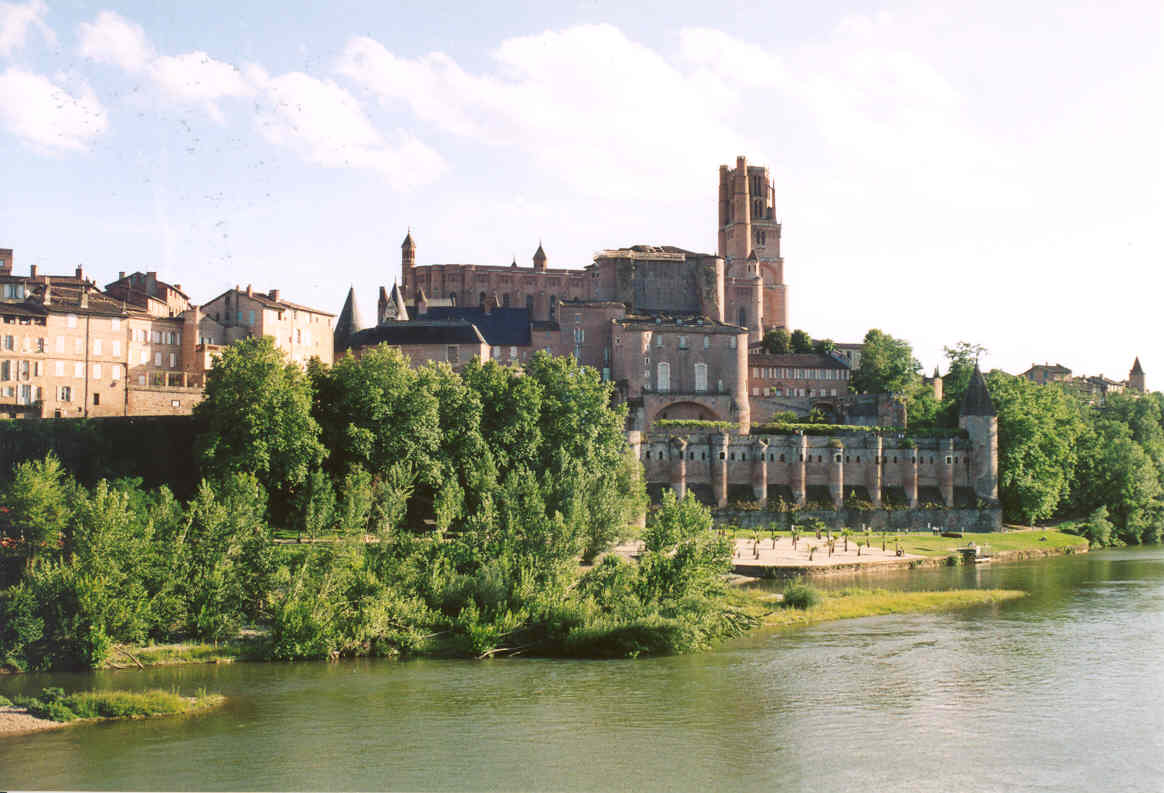
The first sight of the cathedral was enough to stop us in our tracks. From the outside it has the appearance of a fortress rather than the traditional image many of us carry of a great European cathedral. Its enormous red-brick walls rise above the surrounding city, giving it a presence that is almost overwhelming.
The cathedral's construction began in 1282, in the aftermath of the conflict with the Cathars, and suddenly the building began to make more sense. This was not merely a place in which people came to worship. Its imposing exterior was also an unmistakable statement of authority.
But nothing prepared the four of us for what we found when we walked inside.
We were simply blown away by its size and majesty.
For a few moments we almost forgot to move. We stood looking upwards, then sideways, then back again, each of us trying to take in the sheer scale of what was around us. There was so much to see that it was impossible to absorb it all at once. One of us would notice something and point it out to the others, and suddenly we were all looking in the same direction, trying to understand what we were seeing.
The interior was utterly incredible.
The walls and ceilings were covered with an extraordinary wealth of artwork and decoration. The effect was almost the complete opposite of the austere fortress-like exterior. Outside, the cathedral appeared severe and defensive; inside, it exploded into colour, imagery and artistic detail.
Then we came to the enormous Last Judgment fresco.
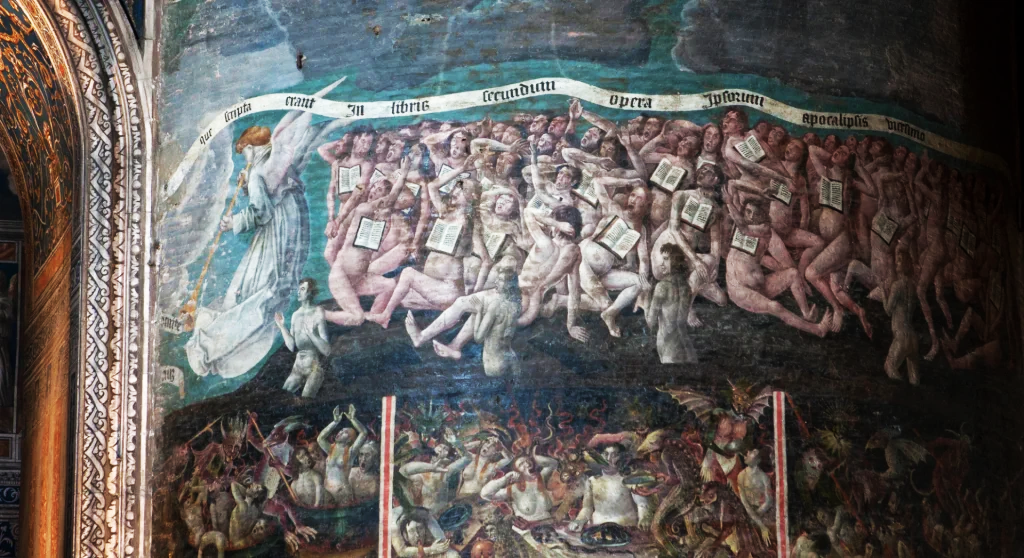
It was impossible not to be struck by it. Yet the more we learned about what we were looking at, the more fascinating it became. This was not Cathar artwork, nor was it a celebration of the beliefs that had once flourished in the region. Quite the opposite. The cathedral and its extraordinary decoration were part of the Catholic Church's response to the defeat of the Cathars, and the imagery of salvation, judgement and damnation formed a powerful theological statement.
Suddenly the artwork had another dimension.
We were no longer simply admiring an astonishing medieval painting. We were looking at a visual declaration of religious authority, created in the aftermath of a bitter conflict in which the Church had sought to reassert its teaching and power. The Last Judgment was not there by accident. It communicated a message about belief, obedience, salvation and the consequences of rejecting the established faith.
The four of us stood there taking it all in, and I remember thinking how extraordinary it was that four Worcester Warriors supporters, who had travelled hundreds of miles for a rugby match, were now standing beneath a medieval masterpiece contemplating one of the great religious conflicts of European history.
It was one of those moments when travel becomes something more than simply visiting somewhere.
History suddenly becomes tangible.
Eventually we stepped back outside into the streets of Albi, but we did so with a different appreciation of the city. We had begun our exploration simply curious about what we might find. We now understood that the buildings around us were part of a much larger story.
And there was still more to discover. |
From Medieval Bishops to Toulouse-Lautrec
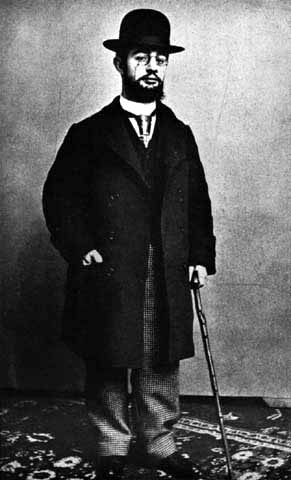
Our next destination took us from medieval religious history into
a completely different world.
The Palais de la Berbie, once the fortified residence of the bishops of Albi, now houses the Musée Toulouse-Lautrec. The change of subject could hardly have been greater. We were moving from a cathedral whose walls carried the story of medieval religious conflict into the world of Henri de Toulouse-Lautrec, one of Albi's most famous sons.
Walking into the museum felt almost like walking from one century into another.
And again, the four of us found ourselves becoming completely absorbed.
We wandered through the galleries together, stopping whenever something caught one of our eyes. One of us would pause in front of a painting or drawing, and within seconds the others would be standing beside him, discussing what we were looking at. Sometimes we knew immediately why a particular work had caught our attention; on other occasions it was simply something about the image, the colours, the expression or the atmosphere that made us stop.
What surprised us most was the sheer depth of the collection.
It wasn't simply a museum where you went to see a handful of famous Toulouse-Lautrec posters and then moved on. There were hundreds of works, and the further we went, the more we felt that we were getting a glimpse into the artist's world rather than simply looking at individual pieces of art.
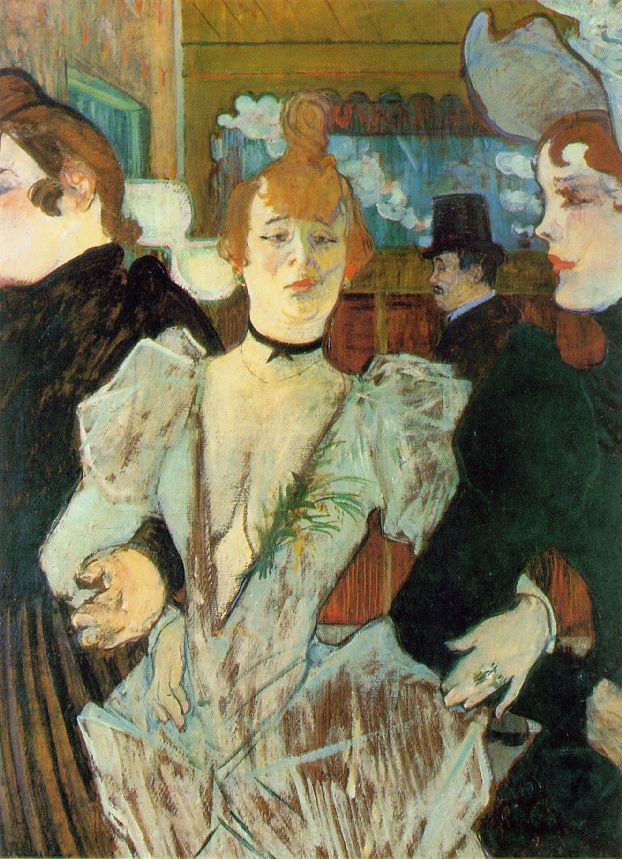
That made the experience much more personal.
We found ourselves discussing the pictures, comparing favourites and occasionally disagreeing about what we were seeing. It was the sort of museum visit that could easily have become tiring, but instead the collection kept drawing us onwards. Every gallery seemed to offer another reason to stop.
There was something particularly interesting about experiencing the cathedral and the Toulouse-Lautrec museum on the same trip. In the cathedral, the art was overwhelmingly about faith, doctrine, judgement and the power of the Church. In the museum, the art was much more personal and individual, offering a window into the life, interests and imagination of one remarkable man.
Two completely different worlds, both contained within the same extraordinary city.
By now Albi had ceased to be simply the destination for a European rugby match. We had begun to experience it properly — its streets, its architecture, its history, its religion and its art.
And then, after all that exploration, there was still the small matter of
why we had come in the first place.
Rugby. |
The Match That Disappeared Into the Fog
There was a wonderful sense of anticipation as match day approached. Worcester had beaten Albi 29–0 at Sixways the previous weekend, and naturally there was optimism among the travelling Warriors supporters. We had crossed the Channel together, explored the city, immersed ourselves in its history and now it was time to see our team take on Albi on their own ground.
The atmosphere around the match had all the ingredients you would expect from a European away game. Worcester supporters were there in numbers, bringing the noise and enthusiasm that had travelled with them from the West Midlands.
Then the weather intervened.
At first it was simply mist. Nothing particularly alarming. Certainly nothing that suggested we were about to witness one of the strangest rugby matches any of us had ever seen. But shortly after kick-off the mist began to thicken.
And then it thickened some more.
Within about ten minutes it had become so dense that visibility had fallen dramatically. From where we were standing, it was becoming difficult to see more than around thirty metres. The pitch was slowly disappearing in front of us.
Rugby became almost an exercise in imagination.
You could hear what was happening before you could see it. The crowd reacted to events somewhere inside the fog, but by the time you tried to work out what had happened, the players themselves had vanished from sight.
It was surreal.
We had travelled all the way to southern France to watch Worcester Warriors play European rugby, and now the rugby was literally disappearing before our eyes. The fog continued to close in until the match could no longer sensibly continue. Eventually, once the required minimum period of play had been completed, the game was brought to an end.
Worcester had won 23–12.
It was a victory, but almost everything about the match was overshadowed by the bizarre circumstances in which it had been played. How many supporters can say they have watched a rugby match gradually disappear into a wall of fog?
It became one of those stories that would be retold long after the score had begun to fade from memory. The journey to Albi had already given us history, architecture, art and culture. The match had now added something that none of us could possibly have planned for.
The rugby had been the reason we came.
The fog had given us the story we would remember.
|
Toulouse — The Final Chapter
Eventually the time came to leave Albi, and our journey home took us towards Toulouse. But even then the trip wasn't quite finished. We had time to enjoy one more taste of France before heading back to Britain, and Toulouse provided a fitting final chapter to what had become a remarkable few days.
After the intensity of the rugby and the sightseeing, we settled down to a lovely Christmas lunch. There was something particularly enjoyable about sitting together, relaxing properly, talking over the events of the trip and enjoying a few glasses of wine. The match, the fog, the cathedral, the museum and all the other experiences of Albi were now behind us, and we had the luxury of being able to look back on them while knowing that there was still a little more adventure ahead.
And then we headed into the Toulouse Christmas Market.
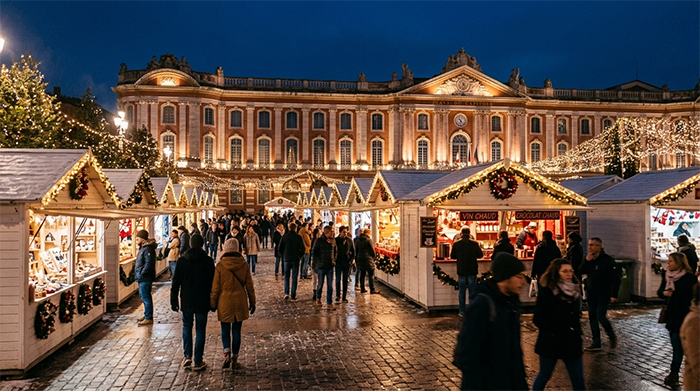
What greeted us was quite a spectacle.
The market was packed with thousands of people, with the residents of Toulouse clearly determined to enjoy themselves. Music filled the air, people were laughing and dancing, and everywhere we looked there were rows of wooden cabin-style stalls decorated for Christmas.
The atmosphere was infectious.
The stalls were packed with Yuletide gifts, decorations, food and all manner of Christmas memorabilia. People wandered from one cabin to another, stopping to browse, chat and buy things, while the music and movement of the crowd created that wonderful feeling that Christmas was just around the corner.
For about three hours we simply wandered. There was no great plan and no need for one. We had already done the sightseeing. We had already experienced the rugby. This was about soaking up the atmosphere and enjoying the final few hours of our French adventure.
And perhaps that was the perfect way to finish.
After all, the trip had never really been just about rugby. The rugby had brought us to France, but it had taken us somewhere much further than a rugby ground. We had walked through a city whose history stretched back through centuries of religious conflict. We had stood beneath magnificent medieval artwork and discovered the powerful story behind it. We had wandered through the world of Toulouse-Lautrec and found ourselves genuinely fascinated by the depth of his work. We had stayed in an extraordinary old building whose own history seemed to echo the history of the city around us.
And, of course, we had watched a rugby match disappear into the fog.
Now, surrounded by thousands of people enjoying themselves in the Toulouse Christmas Market, with music playing, the wooden stalls glowing with Christmas decorations and the smell of food and drink drifting through the crowds, the whole journey seemed to come together.
We had arrived in France as Worcester Warriors supporters.
We were going home with memories of far more than a rugby result.
There are European rugby trips that you remember because of the match. There are others that stay with you because of the result. But occasionally there is a trip where the rugby becomes the thread that runs through something much bigger — a journey of friendship, discovery, history, laughter and shared experience.
Albi was one of those trips.
The four of us had travelled there to support Worcester Warriors, but along the way we had discovered a remarkable French city, stepped into its turbulent medieval past, marvelled at the majesty of Sainte-Cécile Cathedral, stood beneath the extraordinary Last Judgment fresco, wandered through Toulouse-Lautrec's world and experienced a rugby match unlike any other.
And then, as if the trip needed one final flourish, we spent three glorious hours in Toulouse surrounded by the sights and sounds of Christmas before heading for home.
We had come for the rugby - we left with a story.
And isn't that what following Worcester Warriors has always been about? |
WHAT DO YOU THINK ABOUT THE ARTICLE
(Make your selection below) |
|
|
|
|
|
 |