 |
Chapter 12 is where we move from the collapse of the old organisation to the Worcester Warriors that supporters have today. The key is to establish how the club was rescued, how Atlas gave way to Junction 6, what roles Chris Holland and Steve Diamond played, and how the rugby operation and Sixways property were brought together again.
We also need to be precise about what “ownership” means: who owns the operating business, who controls the property companies, who runs the rugby side, and which historic debts remain with the companies that incurred them. A rescue can preserve the club without wiping out its past. |
CHAPTER 12
THE NEW WORCESTER WARRIORS
Who owns what now — and how the club rose again
The old company had collapsed. The P Share had been sold. The first rescue had failed. Yet, against the odds, Worcester Warriors returned to professional rugby — and in their first season back, became champions.
A club had to be built again
For Worcester Warriors supporters, the years following September 2022 were an extraordinary test of loyalty. The club had lost its place in the Premiership, its original operating company was in administration, its players’ employer had been wound up, and the future of Sixways had become entangled in a complex series of property transactions and insolvency proceedings.
The first attempt to rescue the rugby operation, led by Jim O’Toole and James Sandford through Atlas, had brought professional rugby back within reach. But Atlas itself entered administration in April 2024. The business and assets were subsequently sold to Junction 6 Limited, a company associated with Chris Holland’s Loxwood Holdings.
This was not a simple return to the position Worcester had occupied before its collapse. The club had to establish a new operating structure, recruit staff and players, secure its future at Sixways and satisfy the governing body that it could meet the requirements of professional rugby. The original P Share had gone, the old company remained in administration, and the financial obligations inherited from the collapse had not simply vanished.
The task facing the new ownership was therefore twofold:
to preserve the rugby club and to create a business capable of sustaining it.
In April 2025, after a detailed application process, Worcester Warriors were accepted into the new professional Tier 2 competition for the 2025–26 season. The club would return to Sixways, not in the Premiership where it had fallen, but in the second tier of English professional rugby. [1]
That decision marked a major turning point. Worcester Warriors were back in the professional game. But the question remained: who now owned the business, who controlled the stadium, and how did the new structure differ from the one that had failed? |
Junction 6 and Loxwood: the new centre of control
The central names in the present structure are Junction 6 Limited, Loxwood Holdings Limited and Christopher Holland.
Junction 6 Limited, company number 15508334, was incorporated on 20 February 2024. Companies House records Christopher Holland as its director. Its registered business activity includes the letting and operation of conference and exhibition centres, consistent with the wider commercial role of Sixways as a stadium and events venue. [2]
Loxwood Holdings Limited, company number 06251469, is an established company associated with Holland. It provided the financial backing behind the transition from Atlas to Junction 6. Public reporting described Loxwood as becoming the majority shareholder of Atlas in 2023 after a loan default, and later placing the business into a pre-pack administration process through which the assets were acquired by Junction 6. [3]
It is important to distinguish the companies and the stages of that process. Loxwood’s financial backing, its shareholding in Atlas and Junction 6’s later acquisition of the business and assets were connected events, but they were not the same legal transaction.
The BBC reported that Atlas failed to repay a loan by the agreed date in May 2023, after which Loxwood became the 97% owner of Atlas by default. In March 2024, the business was then transferred through the pre-pack process to Junction 6, a company owned by Loxwood. [3]
The sequence is significant. The ownership of Atlas changed before Atlas itself entered administration. The eventual transfer to Junction 6 was not simply a voluntary sale of the old Worcester Warriors back to its original owners. It was a new transaction arising from Atlas’s financial failure.
Holland’s role was therefore central to the survival of the business.
His companies supplied the financial support that enabled the acquisition and the subsequent transfer to Junction 6. But the legal distinction remains: a company owned by Holland could hold shares in Atlas, while Junction 6 could acquire the business and assets through a separate transaction. Neither fact alone proves that every old liability passed to the new company. |
The stadium and the rugby business come back together
The property question had remained one of the most difficult parts of the Worcester story. As we established in Chapter 10, the stadium freehold, the long leases, the car park and the rugby operation had been separated through a series of transactions. The 2022 administration and receivership made the position more complicated still.
The new ownership sought to address that division. Worcester Warriors’ official statement of April 2025 said that Junction 6’s takeover in 2024 had been pivotal in stabilising stadium operations and enabling the return of the club. Holland explained that it had become necessary to take over the freehold interests of the stadium and the Warriors. [1]
Companies House records show that Junction 6 became the person with significant control of MQ Property Co Limited on 30 December 2024, replacing Militibus Quanco Limited. Holland was appointed a director of MQ Property on the same date. The company remained active and filed accounts made up to July 2025. [4]
This is a substantial change from the earlier structure, in which the rugby operation, freehold and long leasehold interests were held or controlled through different companies.
The new arrangement aimed to place the stadium business and rugby operation under a common ownership structure, allowing the venue to support both rugby and other commercial activities. The club’s published explanation of its recovery model emphasised that Sixways needed to operate as a sustainable business, with income from events, ticket sales, matchday purchases and commercial developments contributing to the rugby operation. [1]
That is the principle behind the new model: the club should not depend on one source of income or one financial intervention to survive.
However, we must remain precise about what the public records establish. Junction 6’s control of MQ Property and the club’s statement about acquiring the freehold interests are important evidence, but they do not remove the need to examine the exact title registers and charges for each parcel of land. The property companies also had outstanding registered security arrangements after the 2024 takeover. A charge is security for an obligation, not proof that the charge-holder owns the property outright.
The new ownership structure represents a major step towards bringing the rugby and stadium businesses together. It does not, by itself, prove that every historic property claim or liability has been settled. |
What happened to Atlas?
Atlas deserves a place in this chapter because it was the first consortium to buy the rugby business after the original administration. Its failure could easily have ended the rescue story.
The company completed the acquisition in 2023, but it struggled to meet its financial obligations. Loxwood’s involvement increased, and Atlas ultimately entered administration on 24 April 2024. The business and assets were sold to Junction 6, and Atlas’s administration ended on 25 April 2025. The company was dissolved following liquidation on 25 July 2025. [5]
That is the formal end of the Atlas company.
But the dissolution of Atlas did not mean that the Worcester Warriors brand, rugby business or stadium operation disappeared. The relevant business and assets had already been transferred through the administration process. The new structure continued under Junction 6.
Nor should we assume that every debt incurred by Atlas was paid in full simply because the company was dissolved. The final treatment of liabilities belongs to the Atlas insolvency process, and any claim about what individual creditors received must be supported by the administrators’ final report or other records.
For supporters, the key point is that the first post-administration rescue vehicle failed, but the business was preserved through a second transaction. The rescue was not a straight line from Atlas to a successful rugby return. It required another change of control and another attempt to establish a sustainable structure. |
The people responsible for the rebuild
The new ownership was only one part of the recovery. A professional rugby club requires leadership, coaching, recruitment, medical support, analysts, commercial staff, matchday operations and a functioning relationship with its supporters.
Christopher Holland became the public face of the new ownership, while Stephen Vaughan took on the role of chief executive. Vaughan had previously held a senior executive role at Wasps and had experience of the challenges involved in operating a professional rugby club. The BBC reported that he had been at Sixways since Holland assumed control in September 2023 and helped oversee the rebuilding of the club. [6]
That experience mattered because the task was not simply to sign a squad. Worcester had to re-establish the entire operating organisation. It needed to demonstrate that players and staff could be employed and paid, that the club could meet its commitments, and that the business could support a season of professional rugby without repeating the failures of the past.
Matt Everard was appointed head coach in May 2025. The club announced Matt Kvesic as its first player signing, followed by a recruitment programme that brought together a new squad for the return season. The task was to build a competitive team from scratch while working within the limitations facing a club that had been absent from professional rugby for almost three years. [7]
The rebuild was not simply a matter of restoring the old organisation. It involved creating a new one, with a different legal and financial structure, while retaining the club’s identity and connection to the city. |
And what of Steve Diamond?
Steve Diamond remains an important part of the wider rescue story,
but his role needs to be described accurately.
During the administration in 2022, Diamond led a rival consortium seeking to acquire the club. His proposal competed with the Atlas bid and reflected a different possible route out of administration. It did not become the completed acquisition.
Diamond subsequently took up a role at Newcastle Falcons, later renamed Newcastle Red Bulls, but left in October 2025. The public record cited here does not establish him as an owner or director of the present Worcester Warriors structure. [8]
His involvement belongs in the history of the competing rescue proposals, which will be examined in the next chapter alongside the roles of O’Toole, Sandford, Holland, Loxwood and the other people and companies involved.
It would be wrong to treat Diamond’s earlier bid as evidence of present ownership or to imply that his proposed rescue and the eventual Junction 6 transaction were the same arrangement.
They were distinct efforts, with different parties and outcomes. |
Wasps and the Loxwood connection
The Wasps connection is another part of the story that can easily be misunderstood.
Chris Holland was associated with Wasps, and Loxwood Holdings became the financial backer of Atlas before the Junction 6 acquisition. Public reporting described the original loan arrangement as connected with the possibility of Wasps using Sixways. That created an obvious commercial connection between the two clubs and the stadium. [3]
But a connection is not the same as ownership. Wasps as a rugby club was not automatically the purchaser of Worcester Warriors merely because Holland was associated with both organisations. The relevant legal entities were Loxwood Holdings, Atlas and Junction 6, and their transactions must be followed through the company and insolvency records.
The new Worcester structure was built around Junction 6 and Loxwood. The Wasps connection is relevant to understanding the financial and commercial background, but it should not be presented as proof that Wasps owned the Warriors or their land.
That distinction is important because the club’s future depends on a clear account of who owns the assets, who has provided finance and which companies are responsible for particular obligations. |
The first season back: from survival to champions
The most visible proof of the rebuild came on the rugby field.
Worcester returned to professional rugby in the 2025–26 season, having been accepted into the second tier through the RFU-led application process. The club had to assemble a squad, recruit coaches and support staff, rebuild its matchday operation and re-establish its relationship with supporters.
The challenge was considerable. The squad had not played together before the season, and many players were recruited from the pool of available free agents. Expectations had to be realistic: the first task was to become competitive and build a team capable of improving over the course of the campaign.
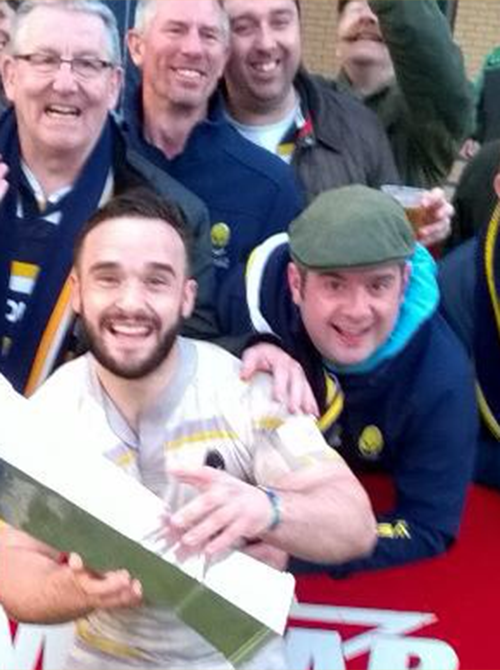
Yet the season exceeded even those expectations. Worcester finished fourth in the regular season, defeated Chinnor in the quarter-final, then produced a remarkable last-play victory over Ealing Trailfinders in the semi-final. Ealing had won all 26 of its league matches, making the Warriors’ victory one of the defining moments of the season. Worcester then travelled to Bedford and won the Championship final at Goldington Road on 31 May 2026, becoming champions in their first season back in professional rugby. [6]
The achievement was extraordinary, but it should not be allowed to obscure the financial questions that remain. Winning a title demonstrates that the rugby rebuild succeeded on the pitch. It does not prove that every historic creditor has been repaid, every old company has completed its insolvency process, or every property charge has been discharged.
The business and the rugby team are linked, but they are not interchangeable. A successful season is a vital step in restoring the club’s future, not a substitute for establishing the financial and legal position. |
Where does that leave the ownership question?
The public record now gives us a clearer picture of the present structure.
Junction 6 Limited is the company at the centre of the current operating and stadium arrangement. Loxwood Holdings provided the financial backing behind the transition from Atlas, and Christopher Holland is the director and public chairman associated with the new ownership. MQ Property Co Limited remains active and is controlled by Junction 6. The old Atlas company was dissolved in July 2025 after its business and assets were transferred through administration.
But several older companies remain separate legal entities. WRFC Trading was still in administration in October 2026. WRFC Players remained in liquidation. Worcester Sport and Sixways Stadium were still shown in receivership-related statuses in the Companies House records consulted for the preceding chapter. The status of these companies is not the same as the ownership of the new rugby business.
That means the current club is not simply the old WRFC Trading company operating under new management. It is a successor operation built through the purchase and transfer of business and assets, with a different ownership and corporate structure.
The historic debts also need to be considered separately. The old government loan, the claims of suppliers and employees, the former owners’ connected-company claims and the liabilities of Atlas do not all belong to one company. Some obligations may have been paid or transferred under particular agreements, while others remain within insolvency processes. The exact final position must be established from the latest reports and accounts.
For supporters, the essential distinction is this: the new Warriors have a future, but the legal and financial history of the old companies does not disappear simply because the team has returned to the pitch. |
A new model — and a new responsibility
The new ownership has publicly described its aim as building a sustainable business that does not depend on a single source of income. The club’s stated model links rugby to the wider commercial operation of Sixways, including conferences, events, matchday revenue and future development of the site. [1]
That is a sensible objective for any professional club, but it must be demonstrated over time through the accounts, funding arrangements and actual operating results. Supporters should be able to judge whether the new model is producing stability, whether the stadium is supporting the rugby operation and whether the club can meet its obligations without recurring financial emergencies.
The return to professional rugby and the Championship title have restored pride and momentum. The challenge now is to turn that achievement into a durable future.
The Premiership remains the ambition, but a route back cannot be assumed merely because Worcester has won the second-tier title. The club must meet the applicable competition and financial requirements, and the loss of the old P Share remains a separate issue from success on the field.
Those questions will be addressed in the final chapter.
Before we get there, we must complete the investigation of the people and companies behind the transactions, identify what remains unresolved, and distinguish the public record from the questions it has not yet answered. |
The Warriors are back — but the story is not finished
The journey from September 2022 to May 2026 is remarkable. A club that came close to disappearing returned to professional rugby and won the Championship in its first season back. The stadium operation was stabilised, a new ownership structure was established and the team rebuilt its identity.
But the recovery is not the end of the investigation. The old operating company remains in administration, the players’ employer remains in liquidation, and other companies associated with the former structure have their own legal status and financial obligations. The new ownership must demonstrate that the business can remain sustainable and meet its commitments.
For the supporters, the most important achievement is that Worcester Warriors once again have a team to follow, a stadium to call home and a future to build. The title at Bedford was a moment of celebration, but it also marks the beginning of a new responsibility: to ensure that the club’s next chapter is built on a sounder foundation than the one that collapsed.
The Warriors have risen again. The final question is whether the new structure can provide the financial, property and regulatory foundations needed to take them back to the Premiership — and keep them there. |
Sources and evidence
[1] Worcester Warriors, 3 April 2025, Worcester Warriors Return to Professional Rugby; club FAQs on the Tier 2 application, stadium ownership, rugby creditors and the DCMS loan.
https://warriors.co.uk/news/worcester-warriors-return-to-professional-rugby/
https://www.warriors.co.uk/we-are-back/
[2] Companies House, Junction 6 Limited, company number 15508334 — company overview, director and filing history.
https://find-and-update.company-information.service.gov.uk/company/15508334
https://find-and-update.company-information.service.gov.uk/company/15508334/officers
[3] BBC Sport, Chris Holland: Wasps owner’s firm becomes Worcester Warriors majority shareholder; BBC Sport, Worcester Warriors: Ex-co-owners TCS upset by new administration.
https://www.bbc.co.uk/sport/rugby-union/66844490
https://www.bbc.co.uk/sport/rugby-union/articles/c9wz4relrzgo
[4] Companies House, MQ Property Co Limited, company number 11472994 — persons with significant control, filing history and charges.
https://find-and-update.company-information.service.gov.uk/company/11472994
https://find-and-update.company-information.service.gov.uk/company/11472994/filing-history
https://find-and-update.company-information.service.gov.uk/company/11472994/charges
[5] Companies House, Atlas Worcester Warriors Rugby Club Limited, company number 14324369 — insolvency and filing history.
https://find-and-update.company-information.service.gov.uk/company/14324369/insolvency
https://find-and-update.company-information.service.gov.uk/company/14324369/filing-history
[6] BBC Sport, 4 June 2026, Play-off win welcome end to unique season — Vaughan; Worcester Warriors, 1 June 2026, Chairman’s End of Season Statement 2026.
https://www.bbc.co.uk/sport/rugby-union/articles/crepej7gdr3o
https://www.warriors.co.uk/news/chairmans-end-of-season-statement-2026/
[7] Worcester Warriors, May 2025, Matt Everard Appointed Head Coach of Worcester Warriors; Matt Kvesic announced as first player signing.
https://warriors.co.uk/
[8] BBC Sport, 1 October 2025, Newcastle Red Bulls: Club parts company with director of rugby Steve Diamond.
https://www.bbc.co.uk/sport/rugby-union/articles/c8xrw5lvy8ro |
Editorial standard
This chapter distinguishes company ownership, control, financing and management. A company’s acquisition of a business does not automatically make it responsible for every liability of the former company. The Championship title is a sporting achievement, not proof that all historical debts have been settled or that Premiership entry is automatic. Statements about the present corporate structure are based on the public records and club announcements cited above, checked as of 13 October 2026. |
| |
WHAT DO YOU THINK ABOUT THE ARTICLE
(Make your selection below) |
|
|
|
|
|
 |