 |
Chapter 13:
The Road Back
Rebuilding the Club, Restoring the Supporters and Creating a Sustainable Future
September 2022–October 2026
When the rugby stopped, the supporters did not
There are moments in the history of a sporting club when the final whistle signifies something far greater than the end of a match. For Worcester Warriors, September 2022 was one of those moments. The collapse of the professional club brought Premiership rugby at Sixways to an abrupt end and left thousands of supporters facing a future they had never seriously imagined: a Worcester without its Warriors.
The silence that followed was perhaps the cruellest part. For years, Sixways had been a place of routine and ritual. Saturday afternoons, familiar faces, conversations over a pint, the anticipation of another battle and the inevitable arguments about refereeing decisions. There were victories to celebrate, defeats to endure and, through it all, the knowledge that another match would soon arrive.
Then, suddenly, there was nothing.
The players dispersed, the coaching staff moved on, and the professional club that had carried Worcester's name into the Premiership was no longer competing. The financial and legal consequences would take years to unravel, but for supporters the loss was immediate and deeply personal. The collapse was not simply the failure of a business. It threatened a sporting identity built over generations, a community of supporters and a place that had become part of Worcester's wider life.
Yet the disappearance of the professional team did not mean the disappearance of Worcester's rugby identity. Worcester Rugby Football Club continued, the rugby community remained, and supporters refused to accept that the story had reached its final chapter.
There would be no straightforward rescue, no immediate return to the Premiership and no guarantee that a new professional Worcester Warriors would ever take the field. What followed was a long, frequently frustrating struggle to establish whether the club could be rebuilt at all.
The road back would require more than a new squad. It would require ownership, finance, a functioning stadium, a commercial operation, regulatory approval and a willingness to learn from the mistakes that had brought the previous organisation to its knees. Above all, it would require the supporters to believe that their loyalty was being invested in something capable of lasting. |
A stadium without its Warriors
Sixways remained standing, but the ground had lost the purpose that had given it its greatest identity. The stands, changing rooms, hospitality facilities and playing surface were still there, yet the absence of Worcester Warriors transformed the atmosphere around the stadium.
The uncertainty extended well beyond the playing field. As earlier chapters have explained, the club's rugby operations, stadium, land and associated property interests had become entangled in a complicated collection of companies, financial arrangements and insolvency proceedings. The rugby business, the stadium freehold and the various property interests were not one and the same thing. Recovering one did not automatically restore the others.
Atlas Worcester Warriors Rugby Club Limited emerged from the administration process as the purchaser of the rugby business in May 2023. But that transaction did not itself deliver a functioning professional team or ownership of the stadium freehold. Purchasing the rugby business was one step; securing the facilities, finances, regulatory approval and organisation necessary to operate a professional club was quite another.
For supporters, the succession of announcements, proposed arrangements and changing expectations became exhausting. Hope would rise with reports of progress, only to be tempered by another delay or complication. There was also the prospect of Wasps playing at Sixways, raising the difficult question of whether Worcester's historic home might become the permanent base of another professional rugby club.
It was not simply a question of whether rugby would return to the stadium. It was whether Worcester Warriors themselves would return.
That distinction was fundamental to the people who had spent decades following the club. A stadium hosting professional rugby was not necessarily the same as a stadium carrying Worcester Warriors into the future. |
The foundations of a new beginning
The recovery depended on establishing a new ownership and operating structure capable of satisfying rugby's governing authorities, funding the club and supporting its longer-term future.
The change in control involving Chris Holland, Loxwood Holdings and Junction 6 Limited, examined in Chapter 12, proved pivotal. Junction 6 acquired the rugby business and assets through the arrangements following Atlas's administration in 2024. The wider process of stabilising the stadium and associated property interests was complicated, but it created the foundation from which a new professional Worcester Warriors could be developed.
On 3 April 2025, the club announced that it had been selected by the Tier 2 Board to join the new professional Tier 2 competition for the 2025–26 season. After more than two years of uncertainty, Worcester had secured a route back into professional league rugby.
The announcement was not an unconditional restoration of the former Premiership club. The new organisation faced regulatory requirements, including arrangements relating to rugby creditors, and had to establish its place within the professional game. Nor did the decision erase the debts, insolvency proceedings or unresolved questions associated with the old companies.
But the central question had finally been answered.
Worcester Warriors were coming back.
The significance of that decision extended beyond the immediate prospect of watching rugby again. It provided a focal point around which the wider rebuilding effort could take shape. The club could recruit players, develop its commercial partnerships, prepare Sixways for regular matchdays and begin rebuilding its relationship with the local business community.
The challenge now was to turn an announcement into a functioning professional club. |
Rebuilding a team from an empty dressing room
There is a considerable difference between taking over an established rugby club and creating a competitive professional team almost from scratch.
Worcester had no existing first-team squad waiting to resume training. There was no settled group of players who had spent years together, no established combinations and no recent record of competitive performances from which to judge the team's strengths and weaknesses.
Chief executive Stephen Vaughan became a central figure in the rebuilding programme. His task was not confined to the playing side. A professional rugby club requires coaches, medical staff, administrators, commercial arrangements, facilities, sponsors and an operational structure capable of supporting a demanding season.
The new Worcester Warriors had to assemble all these elements while reconnecting with a supporter base that had endured years of disappointment.
That meant looking not towards an immediate return to the Premiership, but towards the Championship. For a club that had once competed against Leicester, Northampton, Gloucester, Bath and the other established Premiership sides, it represented a significant change in circumstances.
But after years without a professional Worcester Warriors team, the Championship was not a humiliation.
It was an opportunity: a place from which to start again.
On 13 May 2025, Worcester announced Matt Everard as head coach. Everard arrived with professional coaching experience, most recently at Leicester Tigers, and faced the challenge of building a team capable of competing in a demanding league while establishing a new culture within the club.
He had to create standards, develop trust between players, establish a recognisable style of rugby and ensure that everyone joining the organisation understood the significance of the Worcester Warriors name.
The recruitment programme began with players from different backgrounds and stages of their careers. Among the most significant early arrivals was Matt Kvesic, whose return in May 2025 gave supporters a familiar face around whom the new team could begin to build.
Kvesic had a history with Worcester. He understood Sixways and the emotional attachment supporters had to the club. His return was about more than acquiring an experienced back-row forward; it provided a tangible link between the Warriors of the past and the team being assembled for the future.
Other recruits followed, and the coaching staff set about turning a collection of individuals into a competitive squad. It was a formidable task, with limited time to prepare and no established team combinations to rely upon.
There could be no guarantees of immediate success. The new Warriors would have to learn, adapt and earn their place in the Championship through performances on the field.
But the first essential task had been completed: Worcester once again had a professional team to support. |
The business behind the badge
Rebuilding the playing squad was the most visible part of the recovery, but it was not the only part that mattered.
The financial collapse of 2022 had exposed the danger of operating a professional rugby club without a sufficiently resilient business model. A club could attract a loyal following, play in the Premiership and enjoy substantial crowds, yet still find itself unable to meet its obligations.
The new organisation therefore faced a question that went beyond how to assemble a competitive side: how could Worcester create a business capable of sustaining professional rugby over the long term?
The answer could not depend on one source of income. Ticket sales were important, but they fluctuated with performances, fixtures and supporter circumstances. Sponsorship was valuable, but commercial partners needed a compelling proposition. Hospitality and food and drink could generate income on matchdays, while conferences, private functions, entertainment and other events offered opportunities outside the rugby calendar.
This was the wider challenge facing the commercial and events operation at Sixways. Its work was essential to the recovery, even though much of it happened away from the television cameras and the rugby headlines.
The club's own public explanation of its strategy was clear: a sustainable future would require diverse revenue streams, including events, conferences, partnerships, stadium tenancies and future redevelopment. The intention was to avoid dependence on any single source of income and to establish a more resilient operating model. [1]
This was not merely a marketing exercise. It was a recognition that a professional rugby club must be run as a business every day of the year, not only for the eighty minutes when the first team takes the field. |
Winning commercial partners
The first challenge was to rebuild confidence among businesses that had watched Worcester's collapse and would understandably want reassurance before committing money, services or their reputation to the new organisation.
Commercial partnerships had to offer more than a logo on a shirt. They needed to create a relationship with the club, its supporters and the wider Worcestershire community.
One of the most prominent announcements came on 17 June 2025, when Morgan Motor Company, the Malvern-based sports car manufacturer, became Worcester Warriors' title sponsor for the 2025–26 season. The partnership brought together two recognisable Worcestershire names and included branding on the playing shirts and across Sixways, as well as joint experiences and retail initiatives. [2]
It was an important public endorsement of the new chapter. Morgan's involvement connected the club with a company that had a long history of its own in the county, while offering opportunities to reach audiences beyond the traditional rugby supporter.
Other businesses also came on board. The club's commercial partnerships and supplier network included organisations such as EBC Group, HCR Law and Fews Marquees, alongside a growing range of partners supporting the playing kit, stadium operation and matchday experience. [3]
These agreements mattered in several ways. Sponsorship can provide direct financial support, while supplier partnerships may also improve services, facilities or the value offered to supporters. The exact commercial terms of individual deals are not generally public, so it would be wrong to attach invented values to them or assume that every partnership represents the same kind of income.
Nevertheless, the rebuilding of the partner network demonstrated that Worcester was once again capable of attracting businesses willing to associate themselves with the club.
That confidence would need to be maintained. A sponsorship announcement is a beginning, not proof of long-term commercial success. Partnerships must deliver value to both parties if they are to be renewed, expanded and converted into dependable income.
The work of the commercial team was therefore not simply to sign sponsors for the return season. It was to create relationships that could grow alongside the club. |
Sixways beyond matchday
The stadium itself offered another important opportunity.
Sixways had long been used for more than rugby. Its meeting rooms, hospitality spaces, bars and other facilities gave it the potential to host conferences, weddings, private functions, corporate events and community gatherings. During the period when the professional team was absent, the stadium continued to host events, providing an operational and commercial base from which the wider recovery could develop.
The return of Worcester Warriors created an opportunity to reconnect the venue's different uses. Matchdays could bring supporters through the doors, while private events and business bookings could generate activity at other times. The same facilities could serve different audiences, provided the operation was properly organised and the costs of delivering each event were controlled.
In August 2025, Brookes Catering was announced as the official catering partner for Sixways Stadium and Worcester Warriors. Its remit extended beyond matchdays to private events, weddings, conferences and the provision of meals for the playing squad and staff. [4]
The appointment was significant because catering is not simply an incidental service at a stadium. Food and drink, hospitality and the quality of the visitor experience can influence whether people return, whether businesses choose the venue for an event and whether supporters feel that a matchday is worth the cost.
In September 2025, Freemans Event Partners was appointed to develop food and beverage provision across Sixways, including the Fan Zone and bars. The announced plans included refreshed facilities, improved service, a wider choice of food and drink, live entertainment and a more welcoming matchday environment. [5]
These changes were designed to make the visit to Sixways about more than the match itself. Families, groups of friends and corporate guests could have reasons to arrive earlier, stay longer and make greater use of the venue.
That can create commercial opportunities, although the financial outcome depends on attendance, spending, operating costs and the contractual arrangements with suppliers. Without published figures, it is not possible to say precisely how much additional profit these initiatives generated. Their importance lies in the strategy they represent: improving the experience while building a broader business around the rugby.
The club also continued to promote networking events, family activities, seasonal celebrations and other occasions intended to bring local people and businesses back to Sixways. The return of Fireworks Night and Christmas parties formed part of that effort to restore the stadium's place in the community. [1]
Each event offered a different commercial proposition. A conference, a wedding, a family celebration and a rugby match do not attract the same audience or require the same service. Together, however, they offered the possibility of using the stadium more consistently throughout the year.
For a venue with substantial fixed costs, that matters. A stadium cannot be judged only by how full its stands are on a Saturday afternoon. Its long-term performance also depends on what happens on the other days of the week. |
The events programme grows
By 2026, the ambition to make Sixways a year-round destination had become more visible.
On 18 March 2026, the club announced the Sixways Summer Series, a programme of entertainment designed to attract audiences beyond rugby. The initial line-up included theatre performances featuring West End musical favourites, a Taylor Swift tribute, comedy, Belter's Bingo, outdoor cinema and a sporting dinner. The venue also indicated that further stadium concerts would be announced. [6]
The announcement represented a move towards a more varied events calendar. Rather than relying on a limited number of rugby fixtures to bring people through the gates, Sixways was seeking to attract audiences interested in music, comedy, theatre, film and social events.
That approach could broaden the venue's reach. Someone attending a concert or comedy night might not be a regular rugby supporter, but the event could introduce them to Sixways, its facilities and the Worcester Warriors identity. Conversely, existing supporters could be encouraged to use the venue for occasions unrelated to a match.
The commercial opportunity is clear, but so are the challenges. Events must attract sufficient paying customers, be delivered safely and professionally, and generate enough income to justify their costs. A busy calendar is not automatically a profitable one.
For that reason, the real test of the commercial and events programme will be its results over time: repeat bookings, sustainable partnerships, customer satisfaction and the contribution that events make to the wider operation.
What can already be said is that Sixways was being marketed and developed as more than a rugby ground. It was being positioned as a venue with a role in the county's business, entertainment and social life. |
The matchday experience
The importance of the supporters
None of this diminishes the importance of the rugby supporter. Indeed, the commercial strategy depends in part on retaining the loyalty of those who returned after the collapse.
Ticket sales and season-ticket income remain central to the operation. The supporters who buy tickets, travel to away matches, purchase food and drink, attend hospitality events and encourage others to come to Sixways provide both revenue and atmosphere.
The club's first season back offered a powerful demonstration of that commitment. In his February 2026 statement following planning approval, chairman Chris Holland reported record season-ticket sales and crowds that he said represented nearly half of the league's total attendance. Those are figures reported by the club, rather than independently audited measures of financial performance, but they indicate the scale of the support the new organisation was attracting. [7]
A strong crowd can improve the matchday atmosphere and make the club more attractive to sponsors. It can support food and drink sales, hospitality and other commercial activity. It can also help establish a sense of momentum that benefits the players and encourages further engagement with the club.
The relationship works both ways. Supporters who have waited years for the return of professional rugby deserve a matchday experience that respects their loyalty. Clear communication, accessible facilities, good service, family activities and a welcoming environment all contribute to the bond between club and community.
The club's efforts to refresh the Fan Zone, expand food and drink choices, provide entertainment and create opportunities for supporters to meet players and coaches were therefore more than cosmetic improvements. They formed part of the attempt to rebuild a sustainable relationship between the club and the people who make it matter.
The Worcester Warriors Supporters' Trust also had a role in that relationship, providing an organised supporter voice during the recovery and subsequently becoming the club's recognised supporters' association. Its formation, campaigning and continuing contribution are examined separately in Chapter 13b.
For the new Warriors, supporters were not simply customers. They were part of the reason the club existed and a vital component of its future. |
A bigger vision for Sixways
The commercial programme and the longer-term development of Sixways are closely connected, but they should not be confused.
The events and partnership work described above concerns the use of the facilities and the development of revenue streams that can be pursued through the existing operation. The redevelopment proposals, by contrast, involve substantial changes to the site and depend on planning, finance, detailed design, construction and future commercial decisions.
The vision for redevelopment had been developing for some time. Proposals published by Junction 6 Limited in 2024 outlined plans for a new North Stand, expanded events facilities, a hotel, medical and sports rehabilitation provision, esports facilities, improved parking and other commercial uses. [8]
The argument behind the proposals was that Sixways could become a destination throughout the year, combining professional sport with entertainment, hospitality, health and other activities. Such a development could create new opportunities for the venue and the wider area, while potentially reducing the club's dependence on matchday income and continuing financial support from its owners.
That possibility became more concrete on 27 February 2026, when Wychavon District Council approved outline planning permission for a mixed-use redevelopment on land to the north of Sixways Stadium. The application included a new North Stand with an events centre, esports facilities and food and drink concessions; a hotel of up to five storeys; a medical and sports rehabilitation and office building; an outdoor padel centre; a drive-through facility with electric-vehicle charging; light industrial and trade-counter uses; a multi-storey car park; and a replacement sports pitch. [9]
Planning permission was a significant milestone, but it must be understood for what it is. The approval was an outline application, with most matters reserved for later consideration. It established a planning framework for the proposed development; it did not mean that every facility had been financed, that construction would begin immediately or that every element would necessarily be delivered.
Nor does planning permission alone establish how much profit a completed development might generate, how that income would flow between the relevant companies, or how much would ultimately support the rugby operation. Those questions require evidence about investment, ownership, contractual arrangements, operating costs and the commercial performance of the completed facilities.
The development therefore represents an opportunity,
not a financial result already achieved.
For supporters, it also raises an important question about the identity of Sixways. The site has commercial potential, and the club needs a sustainable business. But Sixways is also Worcester's rugby home. The challenge is to ensure that development supports the long-term future of rugby rather than allowing the commercial ambitions of the site to overshadow the reason supporters care about it.
That question deserves detailed treatment in its own right. Chapter 15 will examine the masterplan, its component parts, the property and financial arrangements, the possible benefits and risks, and the extent to which the proposed development can help secure the future of Worcester Warriors.
For now, the essential point is that the club's recovery has two connected strands: the immediate work of operating and growing the business, and the longer-term ambition to transform the site on which it depends. |
The supporters who refused to surrender
Throughout the years of uncertainty, the Worcester Warriors Supporters' Trust helped ensure that supporters had a collective voice. Its concerns included the future of Sixways and the importance of preserving the site's rugby identity, particularly when proposals involving another professional club raised fears that Worcester itself might be displaced.
The Trust's role did not amount to ownership of the stadium, control of the redevelopment or a veto over the decisions of the club's owners. Those legal and commercial powers lay elsewhere. But it provided a way for supporters to organise, raise concerns and maintain pressure for a future in which Worcester Warriors remained central to Sixways.
As the professional team returned, the Trust also developed its role as a supporters' association, helping to connect the new club with the people who had remained loyal through its absence.
The Trust's story is not simply an adjunct to the return of rugby. It is a separate account of supporter organisation, community commitment and the effort to protect the club's identity through a period of profound uncertainty.
For that reason, Chapter 13b will examine the Trust in depth: how it was formed, what it sought to achieve, its campaign concerning the future of Sixways, its relationship with the new ownership and its continuing contribution to Worcester rugby.
Its importance should be recognised here without allowing its story to overwhelm the wider account of the club's recovery. |
A new club, an old identity
The Worcester Warriors who returned to professional rugby in 2025 were operating under a new ownership and organisational structure. The return did not undo the insolvency of the former professional rugby companies, restore the old Premiership membership or automatically settle the claims of former creditors.
Those matters belong to the complicated legal and financial history examined in earlier chapters.
What returned was the professional rugby operation, the Warriors name, the club's colours and the connection with its supporters. This was both a continuation and a new beginning.
The distinction matters because it prevents the emotional success of the return from obscuring the financial questions that had made the collapse possible in the first place.
The old Worcester Warriors had reached a point at which the business could no longer sustain professional rugby. The new organisation would have to demonstrate that it could avoid repeating those failures. That meant more than attracting a crowd or signing a sponsor. It meant building a business in which ticketing, sponsorship, hospitality, events, commercial partnerships and the wider use of Sixways could contribute to a coherent and resilient operating model.
The owners' public statements have described that as the objective. The club has also reported encouraging early commercial progress. Those are important signals, but a definitive judgement will ultimately require financial evidence over time. The measures of success will be whether the business can meet its obligations, fund the rugby operation, maintain the facilities and withstand the inevitable setbacks that professional sport brings.
The road back is therefore not complete simply because the team has returned to the pitch. It continues in the offices, meeting rooms, hospitality suites, commercial negotiations and events spaces that support the rugby operation behind the scenes. |
The return to the field
Before the long-term ambitions could be realised, Worcester had to return to playing rugby.
A pre-season fixture against Bath at Sixways on 19 September 2025 marked the return of Warriors rugby to the stadium after almost three years. For supporters who had spent that period wondering whether they would ever see their team again, it was an emotional occasion.
The rugby mattered, but the significance of the evening lay in the simple fact that the Warriors were back at Sixways. The familiar routines could begin again. Supporters could meet old friends, take their places in the stands and argue about selections, performances and refereeing decisions rather than administrators, creditors and corporate structures.
After years of uncertainty, that felt like progress of the most important kind.
The true return to league rugby came on Saturday 4 October 2025, when Coventry arrived at Sixways for the opening fixture of Worcester's Championship campaign.
The occasion carried enormous emotional weight, yet professional sport rarely allows sentiment to determine the outcome. At half-time, Worcester trailed 19–7. Coventry had provided a sharp reminder that the Championship was a serious competition and that the Warriors would have to earn everything they achieved.
But the second half brought a transformation. Worcester recovered to win 29–19, scoring four tries in a comeback that provided a dramatic opening to the new era. The result was significant not because it proved that Worcester would dominate the Championship — one match could never establish that — but because it demonstrated the resilience of a squad still learning to play together.
For the supporters, the symbolism was irresistible. After three years in which Worcester Warriors had appeared to be heading towards oblivion, the first Championship match had begun with adversity and ended with a victory.
The club had returned, fallen behind and fought its way back.
It was difficult to imagine a more appropriate beginning. |
4 October 2025
Fortress Sixways awakens!!
The true return to league rugby came on Saturday 4 October 2025, when Coventry arrived at Sixways for the opening fixture of Worcester's Championship campaign.
It was a fitting opponent. Coventry represented the established strength and competitiveness of the division Worcester had joined, and the visitors had no intention of becoming supporting actors in a sentimental homecoming.
The occasion carried enormous emotional weight. Yet professional sport rarely allows sentiment to determine the outcome.
At half-time, Worcester trailed 19–7.
For supporters who had spent three years waiting for this day, it was hardly the comfortable return they might have imagined. Coventry had provided a sharp reminder that the Championship was a serious competition, and that the Warriors would have to earn everything they achieved.
But the second half brought a transformation.
Worcester recovered to win 29–19, scoring four tries in a comeback that provided a dramatic opening to the new era.
The result was significant not because it proved that Worcester would dominate the Championship — one match could never establish that — but because it demonstrated the resilience of a squad still learning to play together.
Everard subsequently acknowledged that the stern examination provided by Coventry had been valuable. The players had been tested, and they had responded.
For the supporters, the symbolism was irresistible.
After three years in which Worcester Warriors had appeared to be heading towards oblivion, the first Championship match had begun with adversity and ended with a victory.
The club had returned, fallen behind and fought its way back.
It was difficult to imagine a more appropriate beginning.
The supporters come home
Perhaps the most remarkable aspect of Worcester's return was not the assembly of a new squad or even the victory over Coventry. It was the strength of the support waiting for the club.
The years without professional rugby had not destroyed the relationship between Worcester Warriors and their followers. If anything, the experience had demonstrated just how deeply that relationship was rooted.
For many supporters, following Worcester was never simply a matter of purchasing a ticket. It was part of family life, friendship and community. Generations had travelled to Sixways together, watched players come and go, celebrated promotions and victories, and endured more than their fair share of disappointing afternoons.
When the club disappeared, those connections remained.
Now the return provided an opportunity to rebuild the matchday community around them.
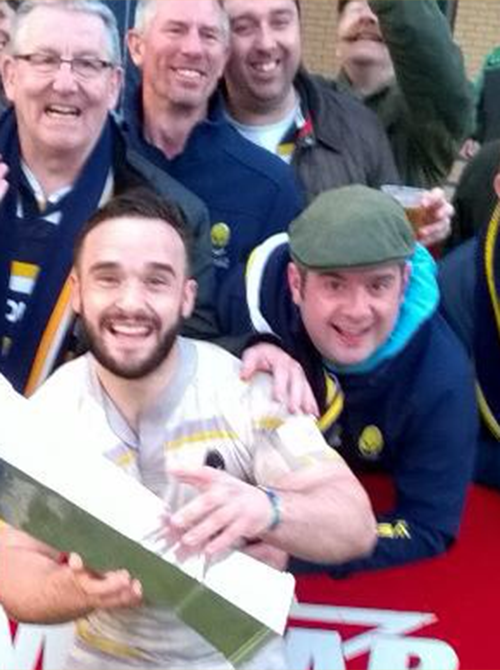
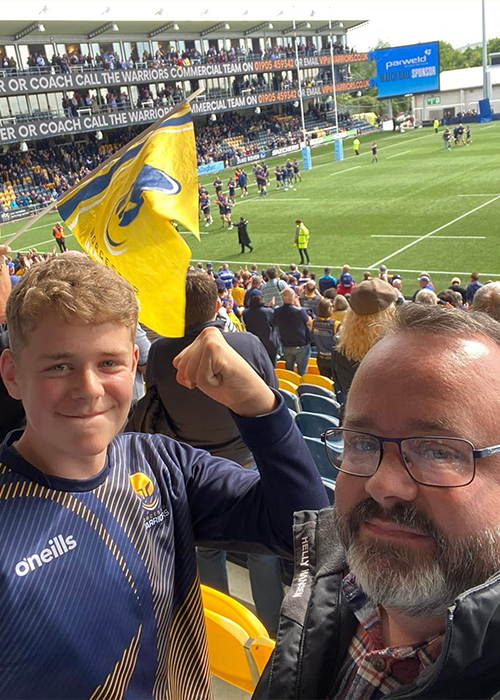
There were familiar faces in the stands and new supporters discovering the club. There were former season-ticket holders returning to their old routines and younger fans experiencing professional rugby at Sixways for the first time.
The voices that had once echoed around the ground could be heard again.
“Warriors! Warriors! Warriors!”
And with them came that familiar rallying cry:
“Come on you Warriors! Come on you Warriors!”
These were not merely chants encouraging a team towards another try. They were declarations that Worcester's rugby identity had survived.
The supporters had not been able to prevent the collapse of the old professional club. They could not resolve its financial difficulties or determine the outcome of the insolvency proceedings.
But they could do something that no administrator, creditor or company director could do on their behalf.
They could bring the spirit of Worcester Warriors back to Sixways. |
Sources and evidence
[1] Worcester Warriors — “Return to Professional Rugby” and sustainability FAQs. Official account of the club's return, its strategy to diversify income through events, conferences, partnerships, stadium tenancies and future redevelopment, and its intention to avoid dependence on a single source of income.
https://www.warriors.co.uk/we-are-back/
[2] Worcester Warriors — “Morgan Motor Company and Worcester Warriors Announce Title Sponsorship”, 17 June 2025. Details of the title sponsorship and joint initiatives for the 2025–26 season.
https://warriors.co.uk/news/morgan-motor-company-and-worcester-warriors-announce-title-sponsorship/
[3] Worcester Warriors — Partners and Sponsors. The club's published partner and supplier list.
https://warriors.co.uk/commercial/partners/
[4] Worcester Warriors — “Brookes Catering Announced as Official Catering Partner of Sixways Stadium and Worcester Warriors”, 1 August 2025. Catering provision for matches, private events, weddings, conferences and the playing squad.
https://warriors.co.uk/news/brookes-catering-announced-as-official-catering-partner-of-sixways-stadium-and-worcester-warriors/
[5] Worcester Warriors — “Freemans Event Partners Teams Up with Sixways Stadium as Worcester Warriors Return to Championship Rugby”, 10 September 2025. Matchday catering, bars, Fan Zone and visitor-experience plans.
https://warriors.co.uk/news/freemans-event-partners-teams-up-with-sixways-stadium-as-worcester-warriors-return-to-championship-rugby/
[6] Worcester Warriors — “Sixways Summer Series Launched for 2026”, 18 March 2026. The stadium's programme of theatre, music, comedy, outdoor cinema and other events.
https://warriors.co.uk/news/sixways-summer-series-launched-for-2026/
[7] Sixways Stadium — Chairman's Statement: Planning Permission Granted, 27 February 2026. The chairman's account of season-ticket sales, attendances, the development programme and the ambition to reduce dependence on matchday income and shareholder funding. These figures and claims are attributed to the club.
https://www.sixwaysstadium.co.uk/news/chairmans-statement-planning-permission-granted/
[8] Worcester Warriors — “Junction 6 Limited Unveil Exciting Vision for Sixways Redevelopment”. Earlier outline of the proposed stadium and mixed-use development.
https://warriors.co.uk/news/junction-6-limited-unveil-exciting-vision-for-sixways-redevelopment/
[9] Wychavon District Council — Planning application W/24/02613/OUT. Official planning record showing approval on 27 February 2026, the proposed uses and the outline nature of the permission.
https://plan.wychavon.gov.uk/Planning/Display/W/24/02613/OUT
[10] Worcester Warriors — “Matt Everard Appointed Head Coach of Worcester Warriors”, 13 May 2025.Official confirmation of the appointment.
https://warriors.co.uk/news/matt-everard-appointed-head-coach-of-worcester-warriors/
[11] Worcester Warriors — “Worcester Warriors Return to Professional Rugby”, 3 April 2025. Confirmation of selection for the professional Tier 2 competition and the ownership and regulatory context of the return.
https://warriors.co.uk/news/worcester-warriors-return-to-professional-rugby/
[12] Worcester Warriors Supporters' Trust — About and History. The Trust's own account of its formation, objectives and activities. Its full history and role will be considered separately in Chapter 13b.
https://www.wwst.co.uk/about-contact |
WHAT DO YOU THINK ABOUT THE ARTICLE
(Make your selection below) |
|
|
|
|
|
 |